


Hair Extension Color Match: How to Get It Perfect Every Time
A bad color match is the single most common reason someone regrets buying hair extensions — and it’s almost never about the quality of the hair itself. It’s about the process used to pick the shade in the first place.
At Silky Lengths OC, we sell 100% virgin, 100% human hair extensions to clients across the entire United States, and we install and teach in person in Irvine and throughout Orange County. That combination means we’ve had to solve the color-matching problem two different ways: face-to-face with a physical swatch, and remotely with someone who’s never stepped into our studio. This guide walks you through both.
Quick answer
The most accurate way to color match hair extensions is with a physical color ring (real hair swatches, not a screen or a photo), held against your hair in natural daylight, comparing both your roots and your mid-lengths — since most heads have more than one tone. If you’re buying online without access to a color ring, natural window light and a “when in doubt, size down” rule (matching your mid-lengths rather than your darker roots) will get you the closest result.
How Professionals Color Match Hair Extensions (The Color Ring Method)
A color ring is a physical set of hair swatches — real extension hair, not printed samples or a screen — attached to a ring so a stylist can fan them out against your actual hair. This is the industry-standard method, and it’s the one we use with every client who comes into our Irvine studio, because it accounts for something a photo simply can’t: how a shade behaves in real light, against real hair texture.
Screens lie about color more than most people realize. Monitor calibration, lighting, and even the color of the shirt you’re wearing can shift how a shade reads on camera. A color ring removes all of that — you’re comparing hair to hair, in person, under consistent light.
What we check with the ring, in order:
- Root color first, since it’s usually the darker, truer base tone
- Mid-length and end color, which is often 1-2 shades lighter from sun exposure or previous color treatments
- How the swatch looks in both natural window light and the studio’s overhead lighting — a shade that matches in one can look off in the other
How to Color Match Hair Extensions Yourself (If Buying Online)
Since we ship 100% human hair extensions nationwide, most of our customers never see a physical color ring before their order arrives — so here’s exactly what we tell them to do instead.
- Take your reference photo in natural daylight, near a window, with no flash. Indoor lighting (especially warm bulbs or fluorescent) shifts almost every hair color warmer or cooler than it actually is.
- Photograph your mid-lengths and ends, not just your roots. If you color your hair or have any sun-lightened ends, your roots and ends may need to be treated as two different shades — more on this below.
- Avoid filters, “enhance” settings, or auto-color-correction on your phone camera. These are designed to make skin tones look good, not to represent hair color accurately.
- When your color falls between two shade options, size down — pick the slightly darker of the two. It’s far easier to lighten extensions with toner than to darken hair that’s too light, and a shade slightly darker blends more forgivingly at the root.
- Ask for a physical sample before committing to a full set, if the retailer offers one. This is standard practice for any reputable 100% human hair supplier, and it’s one we offer specifically because we know color can’t be guaranteed from a photo alone.
How to Match Extensions With Balayage, Highlights, or Ombré Hair
Single-process, one-tone hair is the easiest case. Balayage, highlights, and ombré are where most color-matching mistakes happen — because there isn’t one shade to match, there are two or three.
The general rule: match your extensions to your mid-length to end color, not your root, since that’s the section your extensions will actually blend into. If your natural color transitions dramatically (a dark root fading into blonde ends), a single flat-colored extension will almost always show a visible line.
Multi-Tonal Hair: When to Ask for Two Shades
If your natural hair has more than roughly two shades of contrast between root and ends, a single-tone extension set usually isn’t enough for a seamless blend. In these cases, we recommend either:
- Root-shadowed extensions, which are darker at the top and lighter through the lengths to mimic natural regrowth, or
- Two separate shade sets, blended together during installation so the transition falls in the same place your natural hair transitions
This is a case where a trained eye (in person or via a submitted photo reviewed by a specialist) makes a real difference — it’s not something a shade-number chart alone can solve.
Why Your Extensions Don’t Match Your Hair Color (Common Mistakes)
If you’ve ordered extensions before and they came back “close, but not quite,” it’s rarely bad luck. It’s almost always one of these:
- Matching by shade number alone. Two brands’ “#6 Medium Brown” can look noticeably different from each other, since there’s no universal industry standard for shade numbering.
- Photographing hair under artificial light. As covered above, this is the single biggest cause of a mismatch on remote orders.
- Only matching the roots. If your ends are sun-lightened or color-treated, roots-only matching guarantees a visible line at the mid-length.
- Using processed or non-virgin hair. Hair that’s already been chemically treated by the manufacturer can shift tone once it’s exposed to your own styling routine, sun, and products — which is one of the reasons we work exclusively with 100% virgin hair that hasn’t been pre-processed or color-stripped before it reaches you.
What Affects How Accurately Extensions Match?
Beyond the matching process itself, the hair you start with determines how well — and how long — that match holds up:
- Virgin vs. processed hair. Virgin hair (never chemically treated) holds its original color consistently. Processed or blended hair can shift or fade unevenly once it’s exposed to washing, heat, and sun, meaning a perfect match on day one can drift by month two.
- Cuticle alignment. Hair with an intact, aligned cuticle reflects light more uniformly, which is part of why virgin human hair reads as a truer, more consistent color than lower-grade blends — even at the exact same shade number.
- Lighting where you’ll actually wear it. A match done for indoor lighting can look different outdoors, and vice versa — which is why we check both when working with clients in person.
FAQ
How do I choose my hair extension color?
Compare your extensions to your hair in natural daylight, checking both your roots and your mid-length/end color separately, and size down to the slightly darker option when you’re between two shades.
Do hair extensions match your hair color automatically
No — even extensions labeled with the “closest” shade number to your natural color can look slightly off due to differences in lighting, hair texture, and how that specific brand’s dye lot compares to your own hair. A physical color ring or a natural-light photo comparison is always more reliable than a shade chart alone.
Can I dye my extensions to match better?
Yes, if they’re 100% human hair — virgin human hair extensions can typically be toned or lightly colored by a professional colorist to fine-tune the match, unlike synthetic extensions, which cannot be safely dyed.
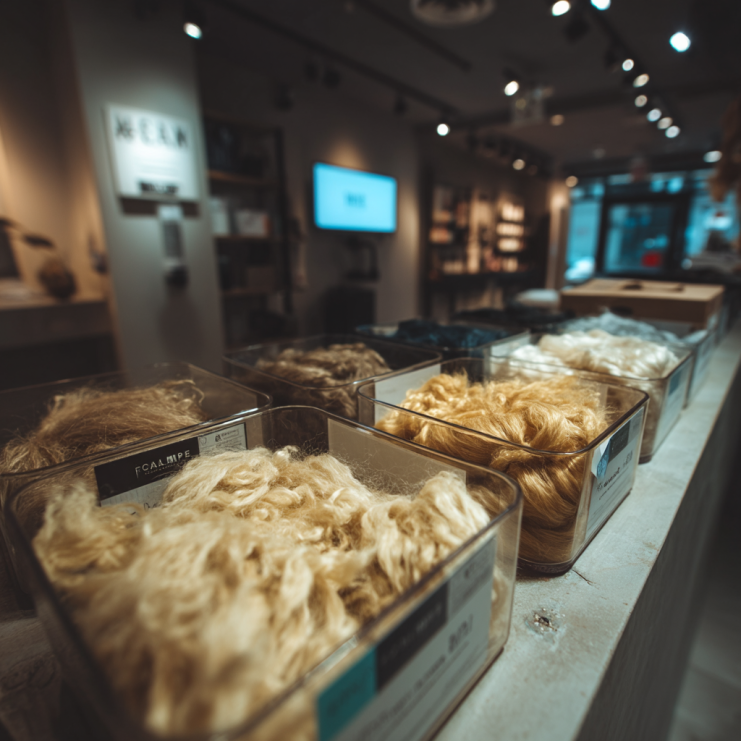
Get a Color Match You Don’t Have to Second-Guess
If you’re in Irvine, Newport Beach, or anywhere in Orange County, we color match every client in person with a physical color ring before a single strand goes in — no guessing from a photo. And if you’re ordering online from anywhere else in the country, our team reviews your reference photos and hair details before your order ships, so you’re not left comparing shade numbers on your own.